
New Braunfels, Texas · Raised houses
Pier and Beam Repair in New Braunfels, TX
For raised houses with a crawl space: firm supports, sound beams, level floors.
Pier and beam repair fixes the supports under a raised house: the piers or blocks the beams rest on, the shims that fill the gaps, and the beams and floor framing above them. The goal is floors that feel firm and doors that close again.
Tell us what you're seeing
- Free inspectionIt costs nothing
- No obligationStopping after the inspection is fine
- Town-by-town soil dataFrom the USDA soil survey
- You never pay usNo fee for using this site
- Call (830) 500-5898Or send the short form
Most of New Braunfels is young, with only 9.0% of homes built before 1960. In nearby Seguin it's 22.4%, and houses from that era are more likely to sit on piers and beams than on a slab.
Signs a Raised Floor Is Moving
A raised house tells you it's moving in its own ways:
A dip or a soft spot you can feel when you walk across a room
Floors that slope toward the middle or toward one wall
Doors and windows that bind, or frames that look out of square
Inside the crawl space: leaning blocks, wood shims that have crushed, or beams that no longer touch their supports
The guidelines Texas engineers use list racked frames, walls separating from floors and sagging framing as signs a foundation may be moving. They also say seeing some of these doesn't mean it's failing, which is why a careful look comes first.
What Pier and Beam Repair Involves
In many older Texas homes, concrete blocks rest on small concrete pads near the surface, stacked to the right height. Those pads move with the ground right under them. Wood shims can also crush over time, which lets a beam drop even when the block below hasn't moved.
So the work usually means resetting or replacing blocks that have tipped or sunk, swapping in steel shims that don't compress the way wood can, and raising the beams back toward level. If a beam or the joists have sagged between supports, they may need added support or replacement. The Texas guidelines cite a common limit: floor members shouldn't bend more than their length divided by 360. Over a 30-foot span, that's 1 inch.
A pier and beam foundation
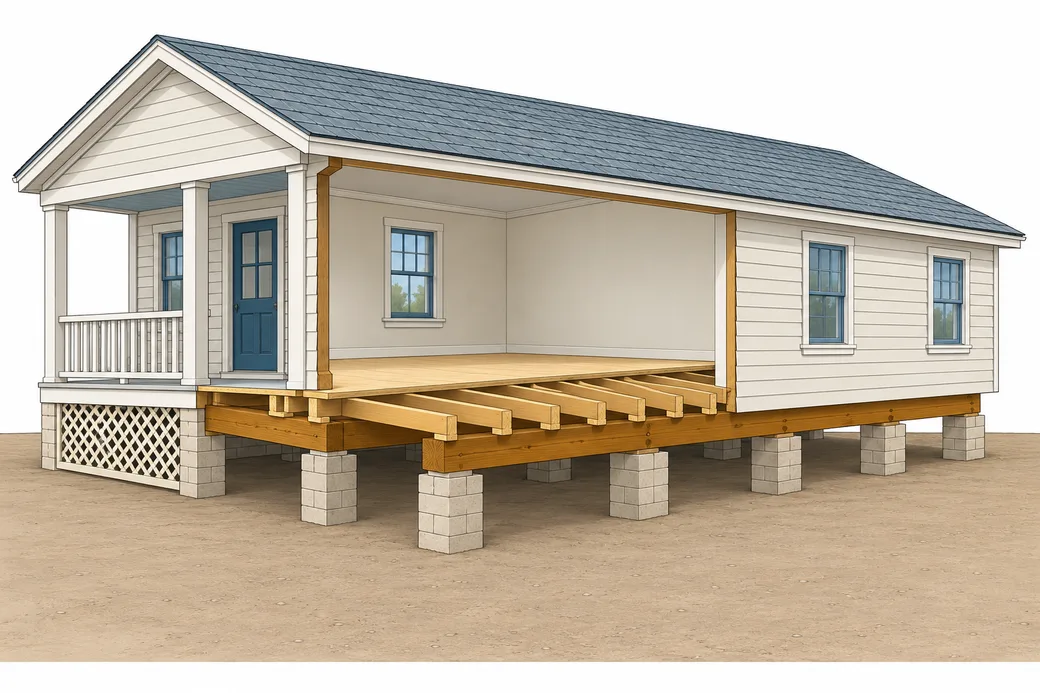
- Piers stand on the ground
- Beams rest on the piers
- Floor joists and the floor sit on the beams
- Open crawl space under the floor
Pier and Beam Repair on Clay and on Limestone
On the clay side, even the surface moves. Under Branyon clay, the most common soil in New Braunfels and 40% of our sample points in Seguin, the USDA survey reads the top foot at 9.9. That's already in the very high band. A block on a small pad near the surface sits right in that layer, so it rises in a wet spring and drops in a dry summer.
On the limestone side, the rock sits about 13 inches under Comfort soil and about 28 inches under Rumple. If floors over rock are still dropping, the shims, the framing or water in the crawl space are likelier suspects than the ground. Our guide to New Braunfels soil shows which side your lot is on.
What Pier and Beam Repair Costs
We haven't found a published local price for pier and beam work that we'd trust, so we won't guess. Here's what moves the price:
- How many supports need resetting, replacing or adding
- Whether beams or joists need repair or replacement
- How easy the crawl space is to work in
- How far the floors have to come back up
The permit is one cost you can check ahead: published foundation repair permit fees nearby run from $225 in Schertz to $500 in Garden Ridge. Beyond that, a fair quote comes after someone has been under the house. Our cost guide explains why foundation prices vary so much.
Why Use Us When a Floor Feels Off
Finding someone to crawl under an older house can take a few calls, and we make it one. Tell us what you're feeling underfoot, and we'll pass it to a single local foundation repair pro who serves your area. They inspect for free, quote any work themselves, and leave the decision with you. The pro may pay us for passing it on, but you never do. Our disclosure page spells out how that works.
What Happens From Your Call to Firm Floors
1. You call or send the form. Say what you've noticed and where the house is.
2. A look underneath. At the free inspection, someone checks every support, shim and beam in the crawl space, then measures floor heights across the house so the low spots show up as numbers.
3. The permit. In New Braunfels, the city requires a permit for any repair to a building or structure, and foundation repair needs a registered contractor. In Seguin, an owner who lives in the house, has it registered as a homestead and does the work themselves may pull the permit.
4. A last measurement. The floors are measured again. The Texas guidelines say it's unlikely any repair leaves a foundation perfectly level, so the goal is firm and close to level.
Questions About Pier and Beam Repair
How can I tell if my house is pier and beam?
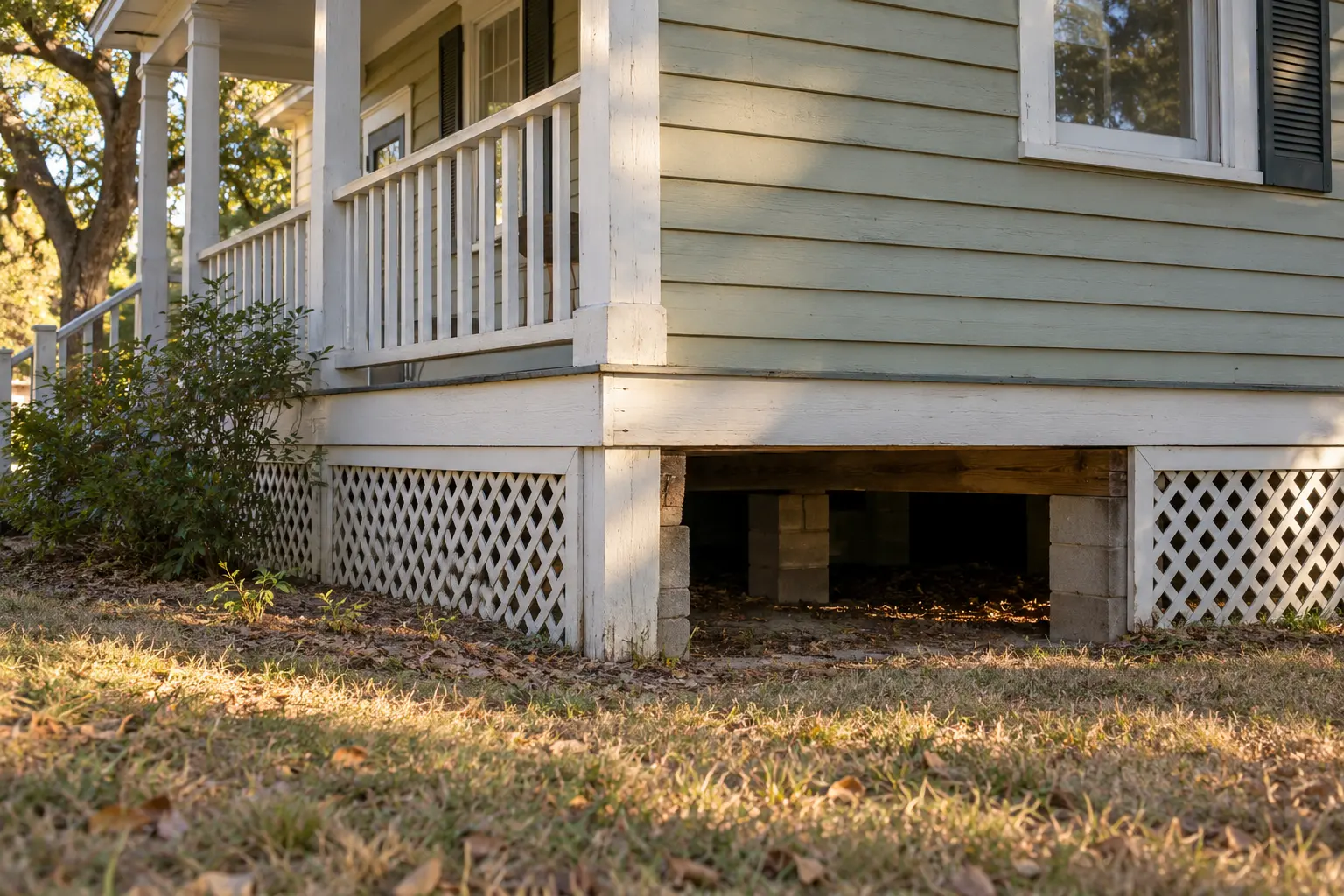
Look at the base of the outside walls. A raised house usually has a gap underneath, closed off by skirting or a short wall, with vents or an access door. Your floors may also sit a few steps above the ground. An inspection will confirm it.
What if my house turns out to be on a slab?
Then the repair works differently, with piers driven under the concrete and a careful lift. Our slab foundation repair page walks through it.
Towns We Serve
Raised houses are most likely where the homes are oldest, like Seguin. We also serve San Marcos, Universal City, Live Oak, Schertz, Cibolo, Converse, Kyle, Selma, Garden Ridge and Canyon Lake. See all service areas.
Get a Free Pier and Beam Inspection in New Braunfels
Tell us what you're feeling underfoot, and we'll pass it to a local foundation repair pro. The visit is free, and saying no is always fine.
Tell us what you're seeing